EDIT Lab / LSU

Emerging Diagnostics and Innovative Therapeutics Laboratory

We build electrical sensors for blood, and for the molecules carried in it.

Our sensors read blood without dyes, labels, or sample prep. Some detect a single molecule binding at an electrode. Others track what a whole sample does as it clots.

Molecular sensing

A target molecule binds at an MXene or imprinted-polymer electrode. The impedance of that interface shifts when it does.

Electrochemical impedance
Whole sample at rest

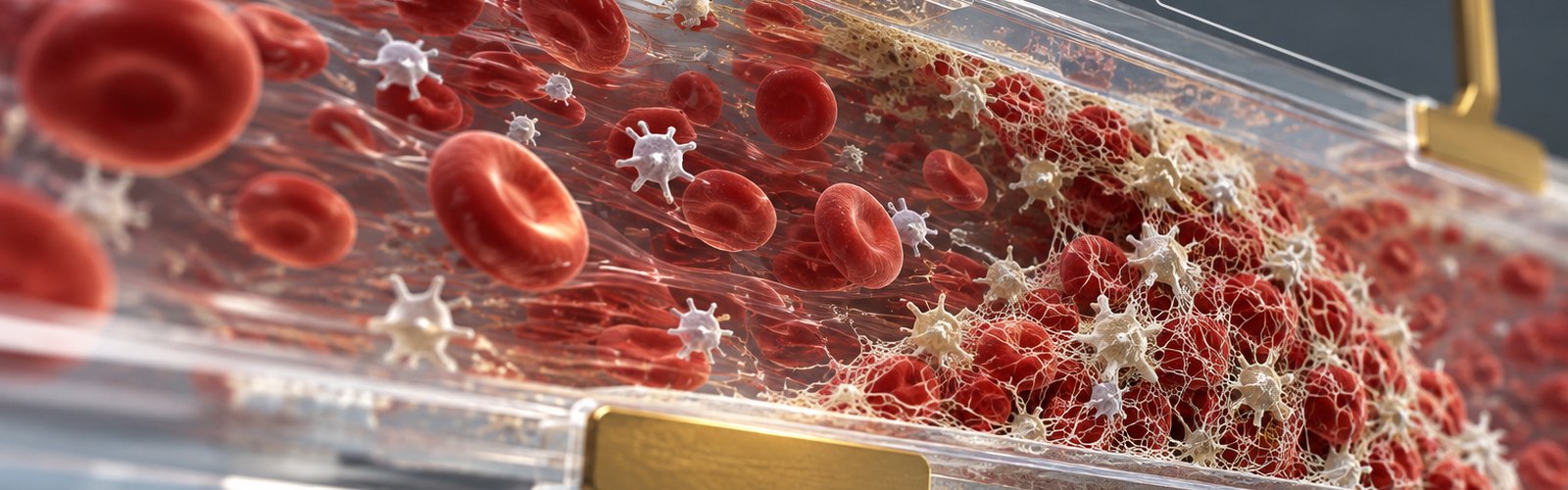
Blood sits between two electrodes. As fibrin forms and the clot contracts, its electrical properties change.

Dielectric spectroscopy, kHz to MHz

Whole sample under flow

The same measurement with shear set by us, running continuously while the clot builds.

Dielectric spectroscopy, under flow
Blood flowing through an electrode-instrumented microfluidic channel.
About

What the lab does.

The EDIT Lab sits in Biological and Agricultural Engineering at Louisiana State University and was established in November 2024. We build electrical and microfluidic sensors for blood and other complex samples, and work toward turning those measurements into diagnostics people can actually afford.

Two things carry information here: what binds at the electrode, and what the sample itself is doing. Depending on the question, we measure one, the other, or both in the same sample.

The second half of the lab's name is therapeutic. Electrical devices can deliver as well as measure, and Dr. Maji worked on in vivo electroporation for targeted delivery before coming to LSU.

Read about the research →

SUPPORT

Research in the EDIT Lab is supported in part by the American Heart Association.

Upcoming

Where to find us.

21-24 October 2026, BMES Annual Meeting, Orlando.

Jithin Thomas Chacko and Ahnaf Tahmid each give a talk in the Thrombosis and Hemostasis session, 1:15 to 2:45 PM on Oct 22nd 2026. Jithin also presents a poster on our electrochemical sensor work that day.

Recent news

Lab news.

September 2026

Seven new undergraduate researchers join the lab: Connor, Sarah, Cohen, Lacie, Rylie, Benson, and Samantha.

June 2026

Collaborative work on DNA-based delivery of incretin receptor agonists using MYO Technology is published in Molecular Therapy Nucleic Acids.

April 2026

Dr. Maji receives an American Heart Association Rapid Impact Research Award.

All news →